PhD Student · USC · Google PhD Fellow
Narjes Nourzad
I work on how learning agents use their own experience — memory, coordination, and feedback — to make better decisions over time.
reinforcement learning · self-improvement · LLM agents
About
Research
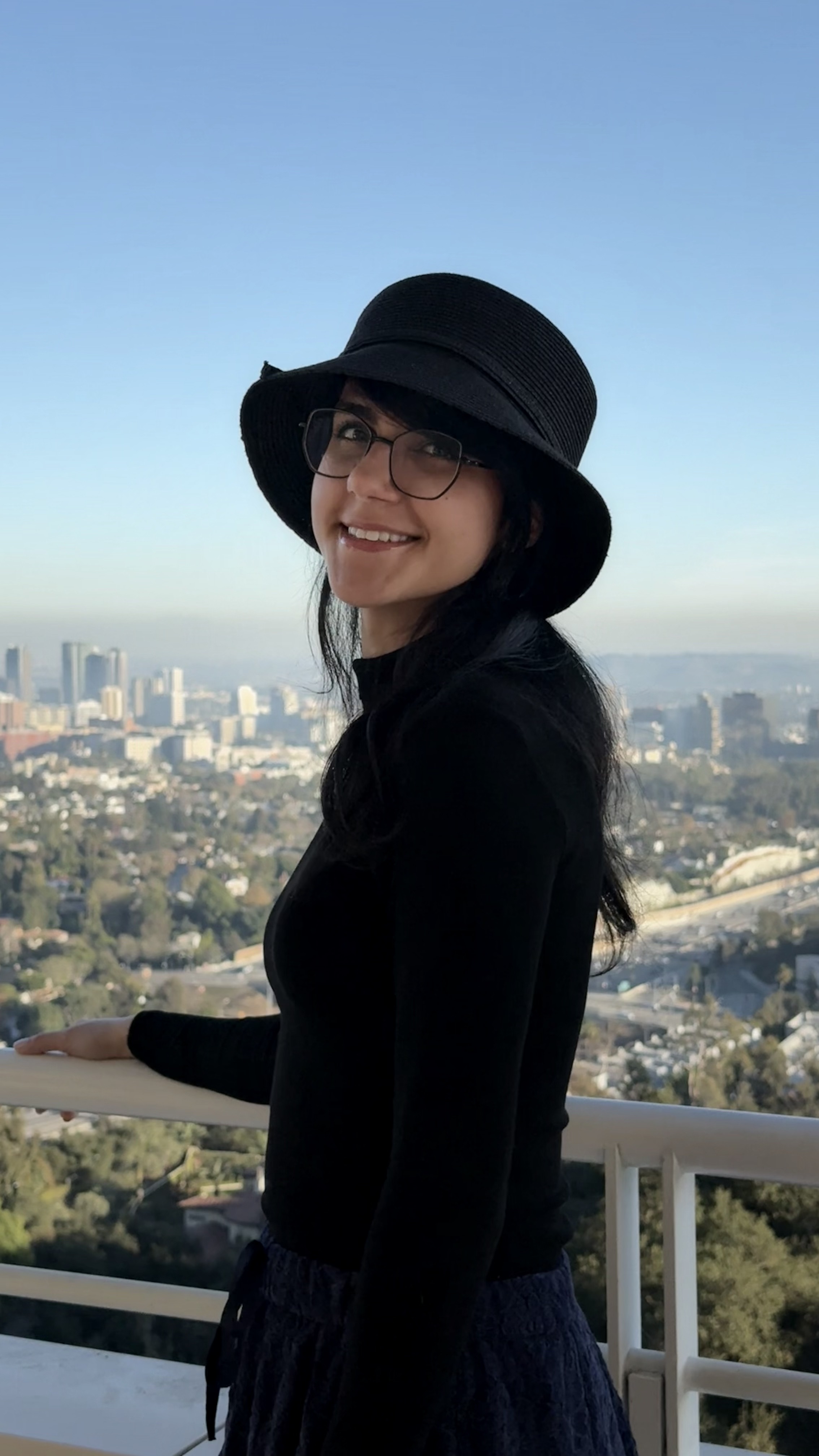
I'm a PhD student in Electrical Engineering (minor in Mathematics) at the University of Southern California, advised by Prof. Bhaskar Krishnamachari. I also work with Prof. Paria Rashidinejad on reinforcement learning for LLM self-improvement, and collaborate closely with Prof. Carlee Joe-Wong at Carnegie Mellon. My research sits at the intersection of reinforcement learning and language models: memory-integrated agents, multi-agent coordination, and LLM-guided decision-making. My research is supported by a Google PhD Fellowship in Machine Learning and ML Foundations.
Most of my work is about how a learning system should reuse its own experience. Across it, the language model's role shifts from advisor, to agent, to learner. In MIRA the LLM advises. An RL agent builds a memory out of the LLM's advice and its own best experience, then uses that memory to shape its advantage estimates during early learning instead of querying the LLM at every step. In the multi-agent work the LLMs are the agents, and the question becomes collective, what a team should remember together. With my CMU collaborators I build shared world models and environments for embodied LLM agents that have to cooperate, and methods for catching and repairing cooperation when it breaks down (DR. WELL, CUBE, COOP²). My current focus makes the model the learner, and its own teacher. In RL for LLM self-improvement the model can pose the problems it then learns from, and the open questions are whether exploration and automatic curricula extend capabilities beyond what pretraining already encodes, and how to evaluate those gains reliably.
My master's work covered sequential decision-making more broadly. Forecasting-augmented RL for smart thermostats, bandit-based wireless routing with theoretical guarantees, actor-critic scheduling of task graphs, and contextual bandits for mobile mental-health recommendation. More recently I spent an internship building an end-to-end pipeline for live network control, from raw telemetry and reward modeling to graph clustering and offline RL, now part of a pending U.S. patent application.
Publications
Papers & preprints
2026
COOP²: Defining, Observing, and Repairing Cooperation in LLM Multi-Agent Systems
Earlier version — CUBE: Collaborative Multi-Agent Block-Pushing Environment for Collective Planning with LLM Agents
Memory-Based Advantage Shaping for LLM-Guided Reinforcement Learning
Offline Reinforcement Learning for Live Network Control
Title withheld pending publication of the application.
2025
DR. WELL: Dynamic Reasoning and Learning with Symbolic World Model for Embodied LLM-Based Multi-Agent Collaboration
AURA: Adaptive Unified Reasoning and Automation based on LLMs and MARL for NextG Cellular Networks
Qualified for the second round of the Qualcomm Innovation Fellowship, 2025.
Actor-Twin Framework for Task Graph Scheduling
Experience
Industry & research
AI Intern
AiRA Technologies
May – Aug 2026
Built an end-to-end offline RL system for live network control, formulating it as a sequential decision problem over graph-clustered cells and training a deep RL agent with a recurrent encoder entirely on logged data. The main challenges were the central problems of offline RL, keeping value estimates anchored to the data distribution and validating the policy without any online interaction. The work led to a U.S. patent application (pending).
Research Intern
Carnegie Mellon University (Prof. Carlee Joe-Wong)
Jun – Aug 2025
LLM-guided RL with memory-augmented feedback, using structured LLM signals to speed up policy learning without querying the model constantly. In addition, built neurosymbolic world models and co-designed the embodied multi-agent environments we used to study coordination under partial observability. The collaboration continued after the internship and led to MIRA, DR. WELL, CUBE, and COOP² — with hopefully many more to come.
Graduate Research Assistant
University of Southern California
Aug 2022 – present
Prof. Paria Rashidinejad — reinforcement learning for LLM self-improvement: whether exploration and automatic curricula can extend model capabilities beyond what pretraining already encodes.
Prof. Bhaskar Krishnamachari (Autonomous Networks Research Group) — RL for adaptive control in networked systems; LLM-integrated multi-agent RL for NextG cellular networks; and structured decision problems, including graph-based task scheduling and bandit-based routing and recommendation with theoretical guarantees.
Undergraduate Researcher
Computational Audio-Vision Lab, University of Tehran
Sep 2021 – Jun 2022
Deep neural networks on seismic sensor data for waveform analysis and representation learning in distributed sensing systems, including discriminating earthquake signals from other events captured by the sensors.
Research Intern
International Institute of Earthquake Engineering and Seismology
Jun – Aug 2020
Signal processing pipelines for seismic data preprocessing — baseline correction followed by filtering to remove long-period noise across earthquake record datasets.
Education
Degrees
Ph.D., Electrical Engineering
minor in Mathematics · University of Southern California
May 2024 – present
M.Sc., Electrical Engineering
Machine Learning · University of Southern California
Aug 2022 – May 2024
B.Sc., Electrical Engineering
Telecommunication · University of Tehran
Sep 2017 – Jul 2022
Honors
Honors and Awards
- 2026Google PhD Fellowship in Machine Learning & ML Foundations, North America.
- 2025Winner, Annenberg Research and Creative Project Symposium, USC.*
- 2023Outstanding Poster Award, 13th Annual Research Festival, USC.
- 2022-6Annenberg Fellowship, USC — four-year fellowship.*
- 2021Exceptional-talent M.Sc. admission, Electrical Engineering, University of Tehran.
- 2017Top 0.5% nationwide, Iranian university entrance exam (Mathematics & Physics).
* Awarded across the Schools of Cinematic Arts, Communication & Journalism, and Engineering.
Contact
Get in touch
The fastest way to reach me is email: nourzad@usc.edu.